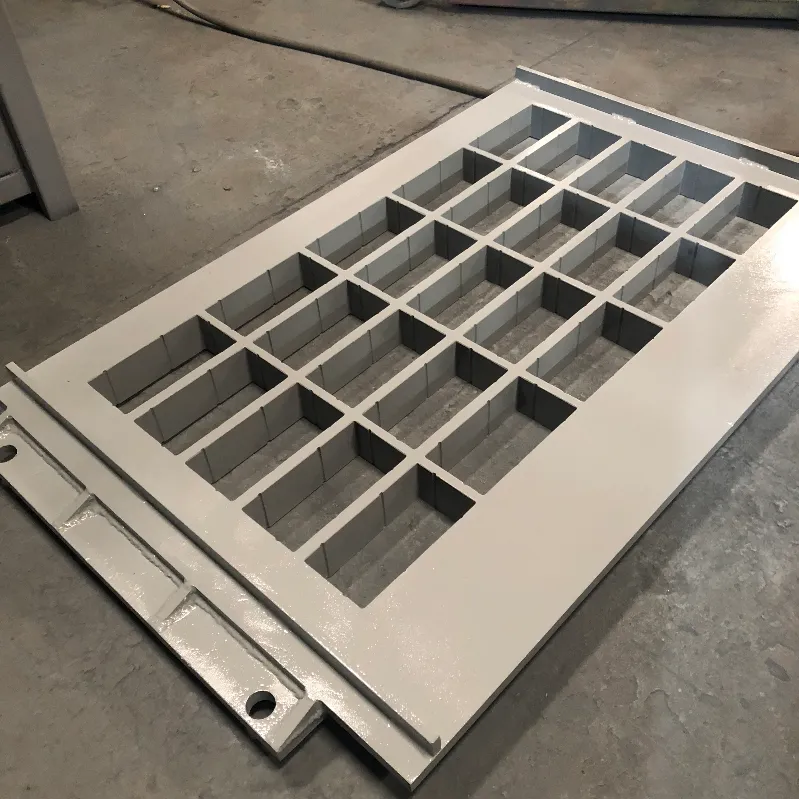
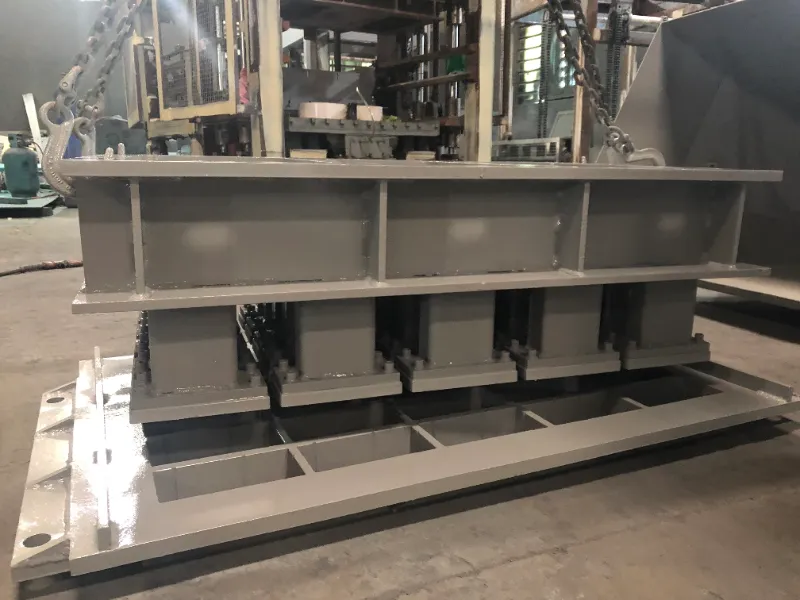
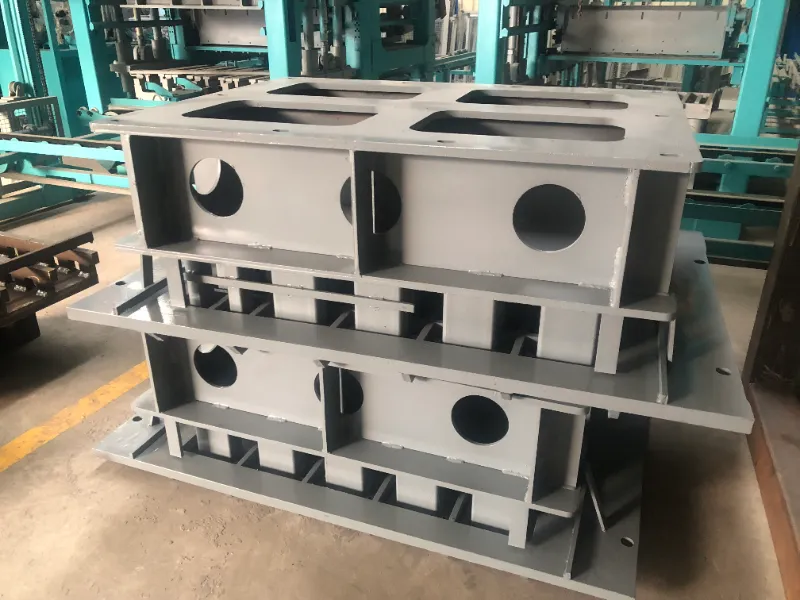
In the world of concrete block manufacturing, the final moment of demoulding is a true test of mould design. Two critical engineering elements—draft angles and surface polishing—work in tandem to ensure blocks release effortlessly, maintaining both product integrity and production efficiency.
A draft angle is a slight taper applied to the vertical walls of a mould cavity. This is not a design flaw but a deliberate feature. Without a draft angle, the compacted concrete block would act like a cork in a bottle, creating immense friction against the mould walls during ejection.
Engineering Principle: The draft angle creates a slight clearance as the block moves upward, breaking the vacuum effect and reducing surface contact. This minimizes the force required from the machine's ejector system.
Optimal Design: The ideal angle depends on the block's height, shape, and surface texture. For standard blocks, a draft angle of 1° to 3° per side is common. However, for blocks with deep textures or complex patterns, larger angles may be necessary to prevent material tearing or surface drag marks. At UNIK, engineers use advanced simulation to determine the precise angle for each unique mould design, balancing easy release with dimensional accuracy.
While draft angles provide the geometric path for release, the mould's surface finish determines how smoothly the block travels along that path.
Friction Reduction: A highly polished mould surface, achieved through progressive fine-grit grinding and diamond buffing, dramatically reduces the coefficient of friction between the concrete and the steel. This means the block slides out more easily, reducing wear on both the mould and the ejection mechanism.
Surface Quality Transfer: The polished surface is not just for function; it's for aesthetics. The smoothness of the mould is directly replicated onto the block's surface. A high-gloss polish produces blocks with a refined, dense, and smooth face, which is especially critical for exposed architectural pavers and wall elements. Conversely, a rough mould surface will result in a rough, porous block that is more susceptible to staining and weathering.
Preventing Buildup: A smooth, polished surface also prevents fine cement paste from adhering to the mould walls during the vibration process. This minimizes the need for frequent cleaning and reduces the risk of paste buildup, which could eventually alter the block's dimensions and surface finish.
The Combined Effect: Efficiency and Longevity When optimal draft angles and superior surface polishing are combined, the results are transformative:
Reduced Ejection Force: Lower resistance means the block machine uses less hydraulic pressure, saving energy and reducing mechanical stress on the machine.
Faster Cycle Times: Quicker, more reliable ejection allows for a faster production rhythm, boosting overall output.
Extended Mould Life: Less friction and stress translate to slower wear on both the mould components and the machine's ejection system, leading to a longer service life for your investment.
In essence, draft angles and polishing are not mere finishing touches; they are fundamental engineering decisions. A manufacturer like UNIK, with a commitment to innovation and excellence, masters these details to deliver moulds that ensure every block releases perfectly, cycle after cycle.