News

Maintenance Skills to Extend Service Life of Brick Concrete Mould

2026-04-24 0 Leave me a message

Practical Guidelines for Block Producers

A brick concrete mould represents a significant capital investment. Replacing a mould prematurely cuts into profit margins. Operating a worn mould beyond its useful life produces out-of-spec blocks, generates waste, and damages the block machine. The solution is systematic maintenance that extends mould life without compromising block quality.

UNIK has been manufacturing brick machines and molds in Quanzhou since 2010, with over 15 years of export experience serving 28 countries. This guide presents maintenance skills organized by frequency: daily, weekly, monthly, and annual tasks. Following these practices can extend mould life by 30-50% beyond manufacturer estimates.

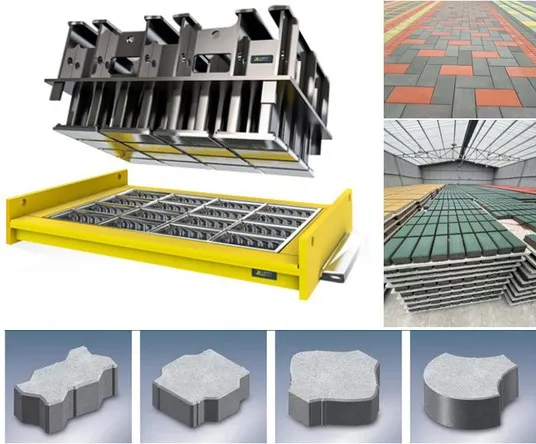
brick concrete mould

Why Brick Concrete Moulds Wear

Understanding wear mechanisms helps operators focus maintenance efforts on the most vulnerable areas.


  • Abrasive wear – Concrete aggregates, particularly sharp sand and crushed stone, act as cutting tools against the mould cavity surface. Over time, they erode cavity edges and enlarge dimensions.
  • Adhesive wear – Concrete particles stick to cavity surfaces, creating buildup that changes cavity geometry and makes ejection difficult.
  • Fatigue wear – Vibration cycles create microscopic stress cracks at sharp corners. These cracks grow over time until pieces of the mould break off.
  • Corrosion – Moisture in concrete reacts with steel surfaces, particularly in cavities that are not cleaned and dried after production shifts.


Each wear type requires different maintenance responses. The skills below address all four.


Daily Maintenance Skills

Daily tasks take five to ten minutes per shift but prevent the majority of long-term damage.

Clean cavities immediately after production – Use compressed air to remove loose concrete particles. Follow with a soft nylon brush for any remaining material. Never use metal tools inside the cavity; they scratch the hardened surface and create starting points for adhesive wear.

Inspect cavity surfaces – Run a fingernail across cavity walls and corners. Any detectable notch or groove indicates wear that needs monitoring. Document findings in a log.

Check core pins – For hollow block moulds, verify that core pins are straight and securely fastened. A loose pin shifts during production, creating uneven wall thickness.

Apply release agent – A thin, uniform coat before each production shift reduces adhesion and ejection friction. Heavy application wastes material and can create surface defects on blocks.

Inspect mounting bolts – Check that all bolts securing the mould to the machine are tight. Loose bolts allow the mould to shift during vibration, accelerating wear on alignment pins and mounting holes.


Weekly Maintenance Skills

Weekly tasks require removing the mould from the machine for thorough inspection.


Remove the mould for cleaning – Take the mould off the machine and clean all surfaces, including the underside and mounting interfaces. Concrete accumulates in areas not visible during daily cleaning.

Inspect cavity corners – Examine all internal corners under good light. Look for hairline cracks that signal fatigue wear. Mark any cracks and measure their length. If a crack reaches 5mm, the mould requires professional evaluation.

Measure critical dimensions – Use calipers to check cavity dimensions at three points: center, near the front edge, and near the back edge. Compare measurements to the original specification. Wear of 0.3mm or more affects block dimensions.

Check surface finish – Run a fingertip across cavity surfaces. A smooth finish feels consistent. Any rough patches indicate areas where the hardened surface has worn through.

Inspect alignment pins – Verify that locating pins are intact and not bent. Damaged pins cause misalignment between mould halves, producing blocks with stepped edges.

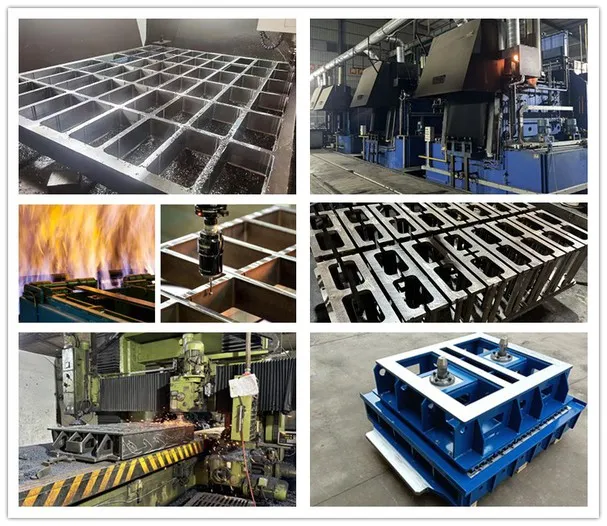
brick concrete mould

Monthly Maintenance Skills

Monthly tasks involve more detailed inspection and documentation.


  1. Perform full dimensional inspection – Measure every cavity dimension and record results. Track measurements over time to establish wear rates. This data helps predict when the mould will need refurbishment or replacement.
  2. Inspect corner radii – Use radius gauges to verify that internal corners maintain their original 3-5mm radius. Flattened corners indicate abrasive wear and create stress concentration points.
  3. Check mounting plate flatness – Place a straight edge across the mould‘s mounting surface. Gap of more than 0.5mm indicates warping, which affects block height consistency across the mould.
  4. Document wear patterns – Take photographs of cavity surfaces and corners. Compare with previous months to identify accelerating wear.
  5. Lubricate moving parts – Apply appropriate lubricant to core pin guides, ejector pins, and any moving components. Use lubricant specified for concrete mould applications; general-purpose oils may react with release agents.


Annual Maintenance Skills

Annual tasks often require sending the mould to a specialized facility.


Professional refurbishment – Worn cavity surfaces can be re-machined to restore original dimensions. UNIK offers refurbishment services that include re-machining cavities, re-polishing surfaces to Ra 1.6, and re-heat-treating to restore HRC59-62 surface hardness. Refurbishment typically costs 40% of a new mould and extends life by 50-100%.

Re-hardening – If surface hardness has degraded but cavity dimensions remain within tolerance, re-heat-treatment can restore wear resistance without re-machining.

Core pin replacement – Replace all core pins at the same time, even if only one shows wear. Mixed new and old pins create uneven wall thickness.

Crack repair – Small fatigue cracks can be ground out and the cavity re-machined. Cracks longer than 10mm typically require mould replacement.


Signs That a Mould Needs Immediate Attention

Do not wait for scheduled maintenance when these signs appear:


Blocks stick in the cavity – Increased ejection force or blocks that require prying indicate surface finish degradation or loss of draft angle.

Inconsistent block dimensions – Blocks from the same mould vary by more than 0.5mm. This signals cavity wear or loose mounting.

Visible cracks – Any crack visible without magnification requires evaluation. Cracks grow rapidly under vibration.

Rough block surfaces – Blocks come out with rough texture or visible lines. The mould cavity surface has worn through the hardened layer.

Increased reject rate – Waste rate doubles from normal levels. The mould is producing out-of-spec blocks.


Storage Skills for Idle Moulds

Proper storage prevents corrosion and damage when moulds are not in use.


Clean thoroughly before storage – Remove all concrete residue. Any remaining material attracts moisture and causes corrosion.

Dry completely – Use compressed air to blow moisture from cavities and corners. Residual moisture causes rust within days.

Apply corrosion inhibitor – Coat all cavity surfaces with rust-preventative oil designed for mould storage. Do not use standard machine oil; it does not provide adequate protection.

Store in dry environment – Keep moulds in an area with humidity below 60%. Temperature fluctuations that cause condensation are particularly damaging.

Support moulds properly – Store moulds on flat surfaces or racks that support the entire mounting plate. Storing moulds on edge or on uneven surfaces causes warping.

Cover moulds – Use breathable covers that prevent dust accumulation while allowing moisture to escape. Plastic sheeting traps moisture and promotes corrosion.

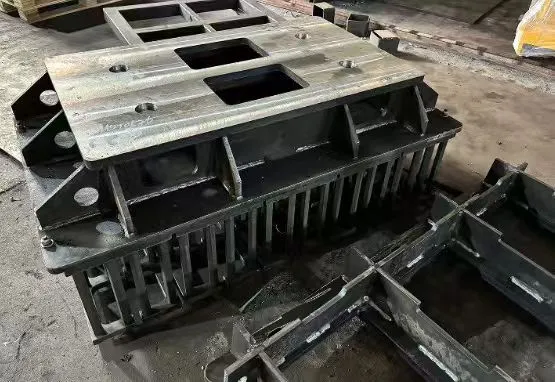
brick concrete mould

Common Mistakes That Shorten Mould Life


Using metal tools for cleaning – Screwdrivers, scrapers, and metal brushes scratch cavity surfaces. Each scratch becomes a starting point for adhesive wear.

Skipping release agent – Operating without release agent increases ejection friction, accelerates wear, and damages block surfaces.

Over-tightening bolts – Excessive bolt torque warps the mould mounting plate. Warping creates uneven block height across the mould.

Ignoring minor cracks – Small cracks grow rapidly under vibration. Early detection allows repair. Late detection requires replacement.

Mixing mould brands on the same machine – Different manufacturers have different mounting tolerances. Switching between moulds without checking alignment damages locating pins.

Running beyond useful life – Using a worn mould produces waste blocks and strains the block machine. The cost of waste and machine damage exceeds the cost of replacement.


How UNIK Supports Mould Maintenance

UNIK has manufactured brick machine moulds in Quanzhou since 2010, with over 15 years of export experience to 28 countries. The company provides:


Refurbishment service – Re-machining, re-polishing, and re-heat-treating to restore moulds to original specifications.

Spare parts – Replacement core pins, wear plates, and alignment pins for UNIK moulds.

Technical support – Remote assistance for maintenance questions and troubleshooting.

Documentation – Maintenance logs and inspection checklists for customers.


UNIK moulds are manufactured from Cr12MoV or 9CrSi alloy tool steel with carburizing heat treatment, achieving surface hardness of HRC59-62 and dimensional tolerance of ±0.3mm. Proper maintenance can extend their service life beyond the standard 80,000-100,000 cycles.


Contact Information

For maintenance questions or to discuss refurbishment services:

Website: www.unikmould.com

Email: sales@unikmould.com

Related News
Leave me a message
X
We use cookies to offer you a better browsing experience, analyze site traffic and personalize content. By using this site, you agree to our use of cookies. Privacy Policy
Reject Accept