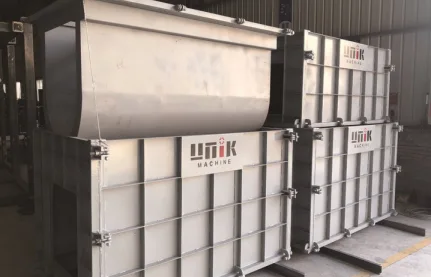
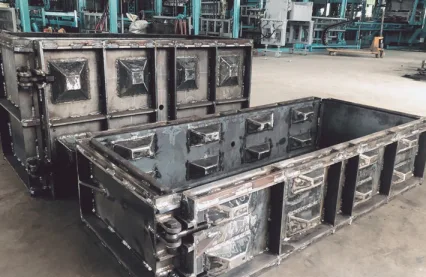
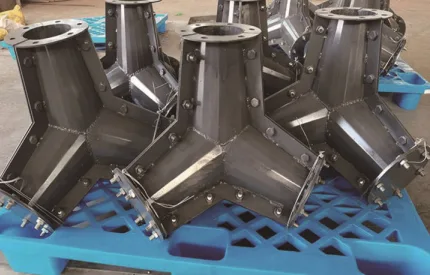
Against the backdrop of modern municipal construction and prefabricated assembly methods, the demand for precast concrete components has surged dramatically. From blast barriers and drainage U-channels to box culverts and Lego-style blocks, precast elements are highly valued for their construction efficiency and consistent quality. As a critical link in concrete product machinery, the design precision and durability of precast concrete moulds directly determine both the cost and the quality of the final product.
Traditional mold fabrication relied heavily on manual experience, often leading to dimensional inaccuracies. Today, leading solutions have fully embraced digital design. As adopted by companies like UNIK Machinery in Fujian, all molds are first modeled in 3D CAD during the design phase and then subjected to computer simulation before manufacturing. This allows engineers to anticipate concrete shrinkage stress and demolding resistance in advance. This process ensures millimeter-level forming accuracy even for complex, irregular components such as pipes with tongue-and-groove or spigot-and-socket joints.
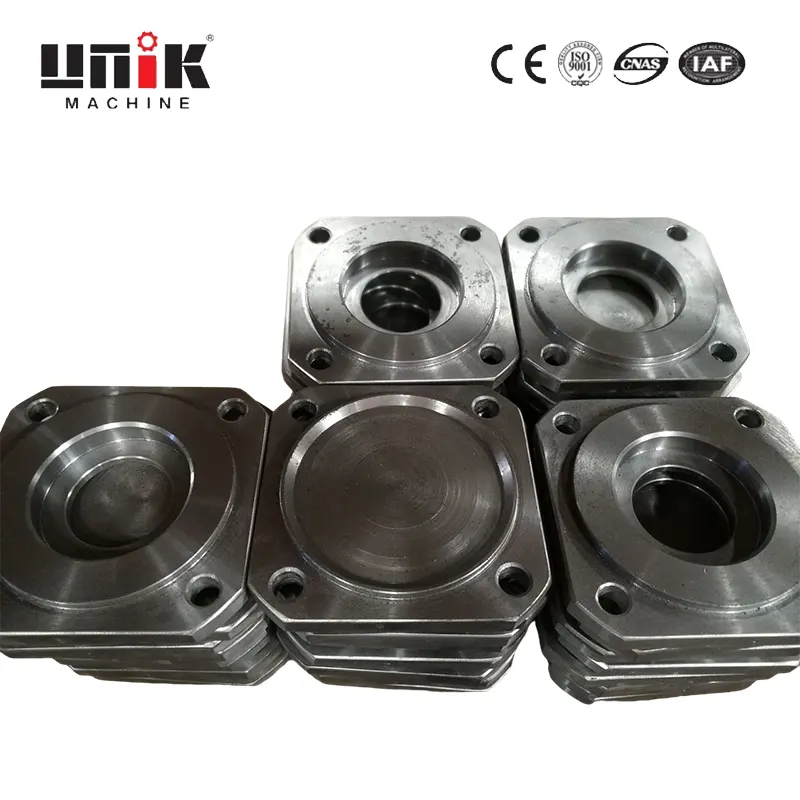
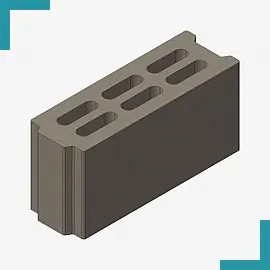
Given the high-frequency use of precast moulds, the industry now predominantly employs high-strength steel that undergoes welding and heat treatment. This material offers exceptional resistance to deformation and can withstand intense vibration and compression. Moreover, the concept of modular mold design is gaining traction. With interchangeable cores and liners, a single mold can be quickly reconfigured to produce different sizes of Lego blocks or kerbstones, significantly reducing customers' mold procurement costs.
Municipal projects often involve a wide range of complex shapes, including crash barriers, drainage channels, and manhole covers. Consequently, molds must be highly adaptable to specific site conditions. Advanced precast mold systems are designed with proper draft angles and a high-quality surface finish, ensuring that the finished concrete components require no secondary grinding and are ready for direct assembly. This high standard of mold engineering is a key enabler of rapid prefabricated construction.
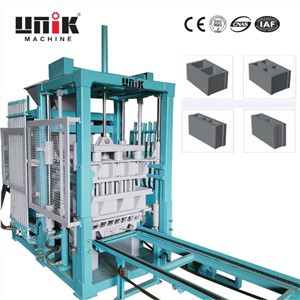
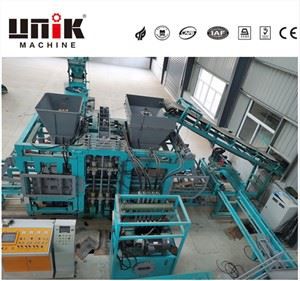
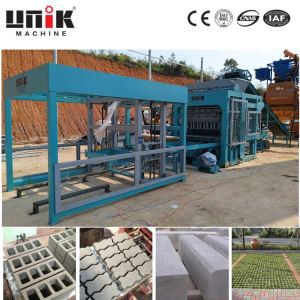
In automatic block production lines, mold design must also be compatible with downstream automated stacking systems. Standardized mold dimensions ensure that after demolding, the wet green blocks can be smoothly picked up by robotic arms or stackers and transferred into curing kilns. This enables a seamless, uninterrupted workflow—from raw production to finished product stacking.