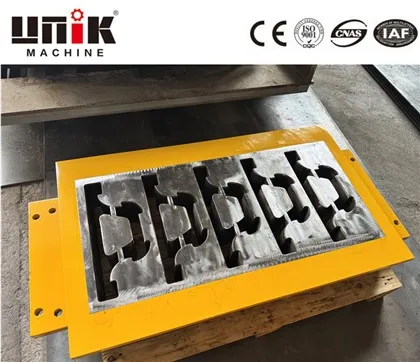
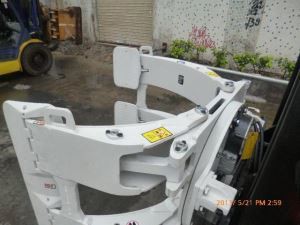
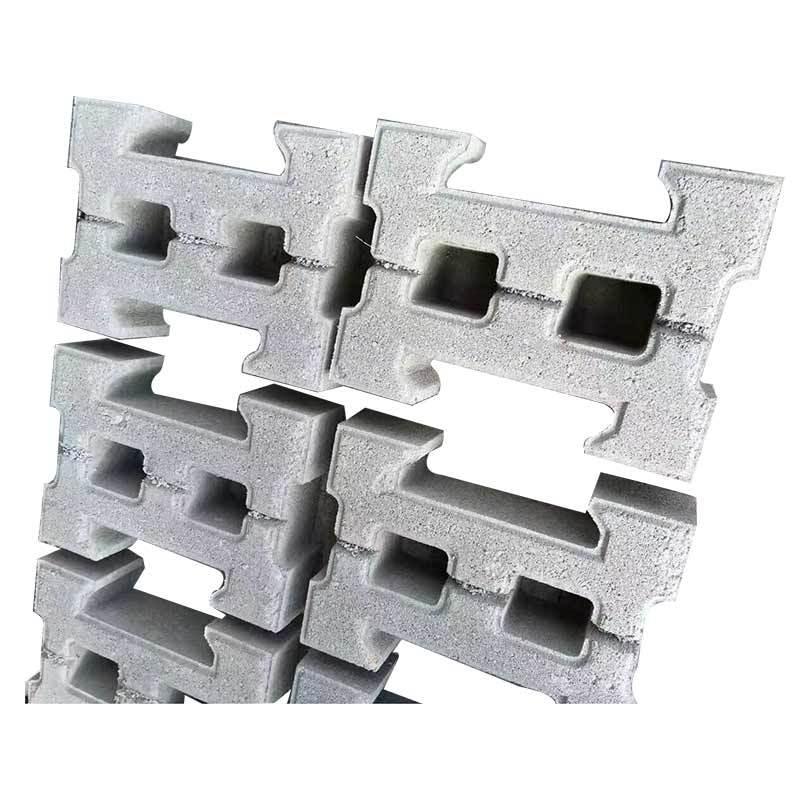
UNIK's factory is located in Quanzhou, Fujian Province, covering an area of over 12,000 square meters. Below is an on-site record of the production workshop.
CNC Machining Center – The workshop is equipped with 4 large gantry machining centers and 4 advanced CNC programming machining centers. These machines perform rough and finish machining of mould cavities, achieving positioning accuracy of ±0.005mm.
Wire Cutting Workshop – Equipped with 27 wire cutting machines for precision contour machining of mould cavities. Cavity surfaces achieve Ra 1.6 finish without secondary finishing.
Heat Treatment Workshop – Equipped with advanced box-type fully automatic heat treatment equipment, capable of carburizing, nitriding, and carbonitriding processes. Furnace temperature uniformity is controlled within ±5°C, ensuring consistent heat treatment for every mould.
Inspection Room – Equipped with CMM, hardness tester, roughness tester, and a full set of metal inspection equipment. Every mould undergoes final inspection here before shipment.
The raw material storage area is clearly organized on the factory floor. UNIK primarily uses 42CrMo forged steel and Mn18 alloy steel. All steel materials come with material certificates traceable to the original mill heat number.
Step 1: Drawing Confirmation
After the customer provides the machine model, block drawing, or sample, UNIK engineers complete 3D modeling and produce machining drawings within 48 hours. Drawings are submitted to the customer for signature approval before production begins.
Step 2: Cutting and Rough Machining
Based on the drawing dimensions, steel is cut to the required blank size using a band saw. Blanks are machined with allowance to compensate for potential deformation during subsequent heat treatment.
Step 3: CNC Finish Machining
Rough-machined blanks enter the CNC machining center for finishing. Cavity dimensions are controlled to ±0.1mm tolerance. Draft angle is machined to 1.5 degrees per side. Corner radius is machined to 3-5mm. Surface finish on critical areas reaches Ra 1.6.
Step 4: Heat Treatment
Finished moulds enter the heat treatment workshop. The standard process involves vacuum quenching at 980°C followed by tempering at 580°C. Surface hardness reaches HRC58-62, while core hardness remains at HRC35-40. For high-wear applications, core pins receive additional nitriding treatment, forming a diffusion layer of at least 0.03mm.
Step 5: Grinding and Polishing
Heat-treated moulds undergo surface grinding. Whole board flatness is controlled to ≤0.5mm. Cavity surfaces are hand-polished to Ra 0.8µm or better, ensuring smooth demolding.
Step 6: Assembly and Inspection
After core pins are installed, all critical dimensions are inspected using a CMM — cavity dimensions, core pin positions, and mounting hole locations. Upon passing inspection, the mould receives anti-rust oil coating and is packed into a wooden crate for shipment.
UNIK holds the following certifications and qualifications. Certificate copies are available upon request.
|
Certification |
Scope |
Status |
|
ISO 9001:2015 |
Quality Management System |
Active |
|
CE Certification |
EU compliance |
Active |
|
SGS Factory Audit |
Supplier qualification |
Active |
|
BV Certification |
Product testing |
Per batch |
|
China Building Materials Standard JC/T 2094-2021 |
Participating drafting unit |
Honorary qualification |
Additionally, UNIK holds multiple invention patents and utility model patents covering mould structure design, quick-change systems, and core pin alignment devices. Patent certificates are available for review upon request.
Case Study 1: Kenya Affordable Housing Project
Customer Background – A construction company in Kenya contracted for a government affordable housing project, requiring approximately 500,000 interlocking blocks annually.
Challenge – The customer's existing moulds produced blocks with inconsistent interlocking features, resulting in gaps and leaning during wall assembly.
Solution – UNIK supplied a three-cavity interlocking block mould made of 42CrMo steel with carburizing heat treatment, with core pin alignment tolerance controlled to ±0.2mm.
Result – Consistent interlocking features were achieved. Wall assembly speed increased by 30%. The customer subsequently ordered 5 additional mould sets.
Case Study 2: Saudi Arabia Retaining Wall Project
Customer Background – An infrastructure contractor in Saudi Arabia needed to produce heavy-duty interlocking blocks for highway slope protection.
Challenge – The local concrete mix contained highly abrasive aggregates, causing ordinary moulds to last less than 50,000 cycles.
Solution – UNIK supplied a tool steel mould with additional nitriding treatment on core pins, achieving surface hardness above HRC62.
Result – Mould life reached 100,000 cycles. The customer has added UNIK to its approved supplier list.
Case Study 3: Philippines Paver Block Producer
Customer Background – A paver block producer in Manila, Philippines, with a daily output of approximately 4,000 blocks.
Challenge – The customer operated a HESS block machine, but previously purchased moulds had mismatched mounting hole patterns, requiring 2 hours of adjustment per mould change.
Solution – UNIK precisely replicated the mounting interface based on the customer's machine nameplate photo and old mould.
Result – The new mould achieved plug-and-play installation, reducing mould changeover time from 2 hours to 15 minutes.
|
Month |
Destination |
Product Type |
Quantity |
|
March 2026 |
Kenya |
Fully automatic production line + interlocking moulds |
1 complete line |
|
February 2026 |
Philippines |
Paver block moulds |
8 sets |
|
January 2026 |
Saudi Arabia |
Retaining wall moulds |
5 sets |
|
December 2025 |
Indonesia |
Hollow block moulds |
12 sets |
|
November 2025 |
Nigeria |
Interlocking block moulds |
6 sets |
|
October 2025 |
Russia |
Insulated block moulds |
4 sets |
|
Region |
Number of Countries |
Primary Products |
|
Southeast Asia |
6 |
Paver moulds, hollow block moulds |
|
Middle East |
5 |
Retaining wall moulds, curb moulds |
|
Africa |
8 |
Interlocking block moulds, complete lines |
|
Russia & CIS |
3 |
Insulated block moulds |
|
Others |
6 |
Custom moulds |
Total mould sets exported – Over 6,000 sets Total customers served – Over 400 customers
UNIK has established or partnered overseas warehouses in the following regions to shorten delivery lead times and provide localized spare parts support.
|
Region |
Warehouse Type |
Coverage Area |
Typical Spare Parts |
|
Nairobi, Kenya |
Partner warehouse |
East Africa |
Core pins, seals, wear parts |
|
Manila, Philippines |
Partner warehouse |
Philippines |
Common moulds, press plates, bushings |
|
Jeddah, Saudi Arabia |
Partner warehouse |
Gulf region |
Wear sleeves, lock inserts |
|
Moscow, Russia |
Partner warehouse |
Russia & CIS |
Insulated block mould accessories |
Overseas Warehouse Advantages:
Emergency spare parts delivered within 3-5 days
Small-batch moulds available for consignment
Customers can schedule on-site inspection
For regions without overseas warehouses, UNIK ships from Xiamen Port and Quanzhou Port. Estimated shipping times are as follows:
|
Destination |
Estimated Transit Time |
|
Major Southeast Asian ports |
5-10 days |
|
Major Middle Eastern ports |
15-20 days |
|
Major East African ports |
25-30 days |
|
Russian Far East ports |
20-25 days |
Trend 1: Interlocking Blocks Shifting from "Functional" to "Durable"
Over the past five years, market requirements for interlocking blocks have shifted from "does it interlock" to "does it maintain interlock under harsh conditions." This has driven higher mould precision standards. UNIK has observed that the proportion of orders requiring core pin alignment tolerance within ±0.2mm has increased from 35% in 2021 to 58% in 2026.
Trend 2: Quick-Change Moulds Becoming Standard
Traditional mould changeovers take 2-4 hours, including disassembly, cleaning, reinstallation, and adjustment. Quick-change mould systems complete changeovers within 15-30 minutes. This technology has highest penetration in the Middle East and Southeast Asian markets, reaching 72% and 58% respectively. UNIK's UNT400/600/800 platforms all feature standardized interfaces supporting quick-change.
Trend 3: Data-Driven Mould Management
Embedded RFID chips are entering mould management. Chips record the mould's unique ID, production date, and cumulative cycle count. Data can be read via handheld terminals and integrated with production management systems. UNIK has equipped over 200 exported moulds with RFID tracking.
Trend 4: Local Service Becoming a Competitive Focus
Pure price competition is being replaced by integrated "price + service" competition. In African and Southeast Asian markets, suppliers with local technical support teams and spare parts inventory are achieving higher customer retention. UNIK has established a strategic partnership in Africa since 2025 and has stationed technical personnel in Kenya to provide on-site installation guidance and troubleshooting.
Africa is the fastest-growing market for interlocking block moulds, with an annual growth rate exceeding 12%.
Drivers – Urbanization rate exceeding 4% annually; housing deficit exceeding 20 million units; governments prioritizing affordable housing.
Competitive Landscape – Chinese suppliers hold approximately 65% market share, European suppliers 20%, local suppliers 15%. Price-sensitive customers favor Chinese moulds.
UNIK Advantages – Complete line delivered to Kenya; partner warehouse established in East Africa; participation in local technical training programs.
Southeast Asia is UNIK's traditional strength market, with annual growth of approximately 7-9%.
Drivers – Continued infrastructure investment; tourism recovery driving resort and commercial projects; stable residential construction.
Competitive Landscape – Chinese and Thai suppliers are primary competitors. Customers have strict requirements for lead times, with 20-25 days as industry benchmark.
UNIK Advantages – Quanzhou's geographic proximity provides 5-10 day shipping to Southeast Asian ports; long-term relationships established with over 50 customers.
The Middle Eastern market has higher mould precision requirements than other regions, with annual growth of approximately 5-7%.
Drivers – Large-scale infrastructure projects; premium residential and commercial development; stringent building material standards.
Competitive Landscape – Premium European brands dominate, but high-quality Chinese suppliers are entering. Customers require ASTM/BS certification, material certificates, and heat treatment reports.
UNIK Advantages – Full certification documentation available; partner warehouse established in Jeddah, Saudi Arabia; 20-25 day delivery lead time.
The Latin American market is significantly affected by economic fluctuations but has positive long-term growth prospects, with annual growth of approximately 4-6%.
Drivers – Post-pandemic construction market recovery; increasing demand for cost-effective Chinese moulds.
Competitive Landscape – Local manufacturers in Brazil and Mexico hold major share, but Chinese mould imports are increasing year by year.
UNIK Presence – Moulds already exported to Brazil, Mexico, and Colombia. UNIK is evaluating the possibility of establishing regional representation.
Since its founding in 2008, UNIK has exported over 6,000 mould sets to 28 countries, serving more than 400 customers. The factory is equipped with CNC machining centers, wire cutting equipment, fully automatic heat treatment lines, CMM, and a full set of manufacturing and inspection facilities. The company holds ISO 9001, CE certification, and other qualifications.
Products cover the full range of interlocking block moulds, hollow block moulds, paver block moulds, retaining wall moulds, and curb stone moulds. Through partner warehouses in Kenya, the Philippines, Saudi Arabia, and Russia, UNIK provides localized spare parts support and technical services.
For factory tour appointments, sample testing, technical consultation, or to request a quotation, contact UNIK.
Website: www.unikmould.com Email: sales@unikmould.com