A Buyer‘s Guide to Understanding What You‘re Paying For
Paver mould prices vary widely across suppliers. A quote for the same paver size can range from under $1,000 to over $5,000. New buyers often choose the lowest price, only to discover that the mould wears out in three months or produces blocks that don‘t meet specifications. Experienced buyers understand that price reflects materials, processing, heat treatment, and quality control.
This guide explains the factors that determine paver mould prices and provides industry standard cost benchmarks. The information is based on UNIK‘s manufacturing experience in Quanzhou since 2010 and over 15 years of export to 28 countries.
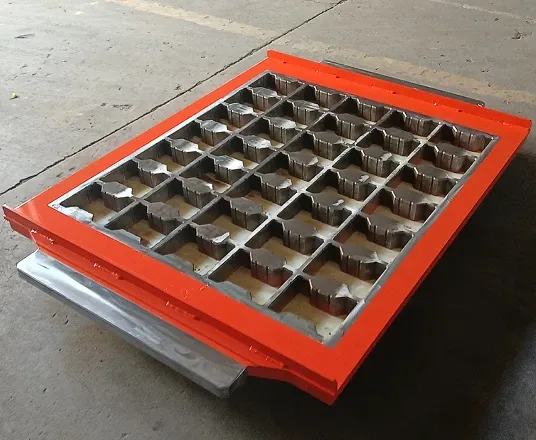
The price of a paver mould is determined by four primary cost drivers: steel grade, heat treatment, machining precision, and cavity count. Each factor has a direct impact on both the initial price and the mould‘s service life.
| Cost Driver | Low-Cost Option | Standard Industrial Option | Premium Option |
| Steel grade | 40Cr or Q235 | 42CrMo | Cr12MoV / 9CrSi tool steel |
| Heat treatment | None or simple quench | Carburizing (HRC58-62) | Carburizing + deep-cryogenic |
| Machining | Conventional milling | CNC machining (Ra 1.6) | CNC + wire-cut (Ra 0.8) |
| Cavity finish | As-machined (Ra 6.3+) | Polished (Ra 1.6) | Mirror finish (Ra 0.4) |
| Expected lifespan | 25,000 – 35,000 cycles | 80,000 – 100,000 cycles | 120,000+ cycles |
Suppliers offering the lowest price typically use low-cost steel, skip proper heat treatment, and accept rough machining finishes. The mould works for a short period but fails quickly. Suppliers offering standard industrial pricing use appropriate materials and processes, delivering predictable lifespan. Premium options add deep-cryogenic treatment and mirror finishes for maximum durability in high-abrasion applications.
The steel grade accounts for approximately 30-40% of the total mould cost.
40Cr or Q235 – These are general-purpose structural steels. They are inexpensive and widely available. However, they lack the hardness and wear resistance required for concrete paver production. A mould made from 40Cr typically lasts 25,000-35,000 cycles before cavity dimensions drift out of tolerance.
42CrMo – This is a chromium-molybdenum alloy steel with good hardenability. It is the industry standard for medium-volume paver production. A 42CrMo mould with proper heat treatment lasts 80,000-100,000 cycles. The material cost is approximately 40-50% higher than 40Cr.
Cr12MoV or 9CrSi – These are high-carbon, high-chromium tool steels designed for extreme wear resistance. They are used for high-volume production or highly abrasive concrete mixes. Material cost is 100-150% higher than 42CrMo, but lifespan extends to 120,000+ cycles.
UNIK uses Cr12MoV and 9CrSi for standard paver moulds, with 42CrMo available for lower-volume applications.
Heat treatment is the most commonly skipped or poorly executed process in low-cost moulds. It accounts for approximately 15-25% of the total mould cost when done properly.
No heat treatment – The mould is machined from annealed steel and shipped. Surface hardness is approximately HRC20-25. Cavity edges round within weeks.
Simple quench – The mould is heated and quenched in oil or water. The entire section becomes hard but brittle. Surface hardness reaches HRC50-55, but the mould cracks under vibration. This process costs little but delivers poor results.
Carburizing – The mould is heated in a carbon-rich environment, allowing carbon to diffuse into the surface layer (1.3-1.5mm deep). The surface becomes hard (HRC58-62) while the core remains tough (HRC35-40). This is the industry standard for quality moulds.
Carburizing + deep-cryogenic treatment – After carburizing, the mould is cooled to -196°C using liquid nitrogen. This converts retained austenite to martensite, increasing hardness and wear resistance. Service life extends by 30% or more.
UNIK applies carburizing heat treatment to all paver moulds as standard, with deep-cryogenic treatment available as an option.
Machining accounts for approximately 25-35% of total mould cost, depending on complexity.
Conventional milling – The cavity is machined using standard milling equipment. Surface finish is Ra 6.3 or rougher. Dimensional tolerance is ±0.5mm or wider. This is suitable for low-volume production where block appearance is not critical.
CNC machining – Computer-controlled milling equipment produces consistent cavities with surface finish of Ra 1.6 and tolerance of ±0.3mm. This is the industry standard for commercial paver production.
CNC + wire-cut EDM – For complex interlocking paver patterns or tight tolerance requirements, wire electrical discharge machining provides the highest precision. Surface finish can reach Ra 0.8. Cost is 30-50% higher than standard CNC machining.
UNIK uses CNC machining for all paver moulds, with surface finish held to Ra 1.6 and dimensional tolerance to ±0.3mm.
Multi-cavity moulds cost more upfront but lower the price per cavity.
| Cavities per mould | Typical total price | Price per cavity |
| 1 cavity | $1,200 – $1,800 | $1,200 – $1,800 |
| 2 cavities | $1,800 – $2,500 | $900 – $1,250 |
| 3 cavities | $2,200 – $3,200 | $730 – $1,070 |
| 4 cavities | $2,800 – $4,000 | $700 – $1,000 |
The price per cavity decreases as cavity count increases because the outer frame, mounting hardware, and setup time are shared across cavities. For high-volume production, 3 or 4 cavity moulds provide the lowest cost per block.
Based on UNIK‘s export experience to 28 countries, the following price ranges represent industry standards for quality paver moulds manufactured with proper steel, heat treatment, and CNC machining.
| Paver type | Typical size | Cavities | Price range (USD) |
| Standard rectangular paver | 200x100x60mm | 2-3 | $1,500 – $2,500 |
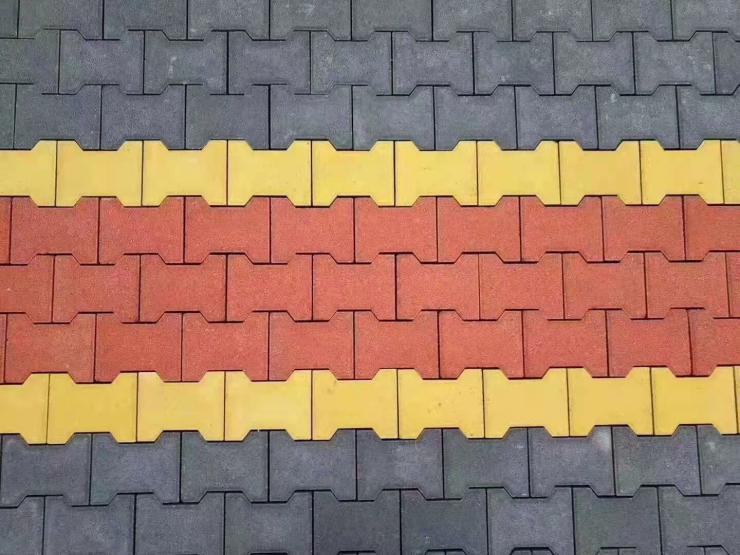
| Interlocking paver | 225x112.5x60mm | 2-3 | $1,800 – $3,000 |
| Grass paver | 333x166x80mm | 2 | $2,000 – $3,200 |
| Wave-type paver | 200x100x80mm | 2-3 | $2,200 – $3,500 |
| Hexagonal paver | 200x200x60mm | 2 | $2,000 – $3,000 |
| Custom design (any size) | Customer specified | 1-4 | $2,500 – $5,000 |
Prices below these ranges typically indicate compromised materials or processes. Prices above these ranges may include premium features such as deep-cryogenic treatment or mirror finishes.
The purchase price is only part of the total cost of owning a paver mould.
Replacement frequency – A $1,000 mould that lasts 30,000 cycles requires replacement every 3-4 months in a double-shift operation. A $2,000 mould that lasts 90,000 cycles requires replacement once per year. Annual mould cost is lower with the more expensive mould.
Downtime – Each mould replacement requires production stoppage. More frequent replacements mean more lost production hours.
Waste blocks – A worn mould produces out-of-spec blocks that cannot be sold. A mould that maintains tolerance longer generates less waste.
Machine wear – A cracked or distorted mould stresses the block machine, accelerating wear on vibration components and hydraulic systems.
Shipping and logistics – Heavier moulds cost more to ship. Multi-cavity moulds weigh more but produce more blocks per cycle, potentially offsetting shipping cost.
To receive a precise quotation, provide the following information to your mould supplier:
Paver size – Length, width, and height in millimeters or inches
Paver pattern – Rectangular, interlocking, wave-type, hexagonal, or custom (provide drawing or sample)
Cavity count – How many pavers per cycle
Machine brand and model – For mounting interface compatibility
Daily production target – To recommend appropriate steel grade and heat treatment
Concrete mix description – Standard, abrasive, or containing recycled aggregates
UNIK provides quotations within 24 hours of receiving complete information.
| Price range | Typical specifications | Expected lifespan | Best for |
| Under $1,000 | 40Cr steel, no heat treatment, rough finish | 25,000 – 35,000 cycles | Occasional use, small projects |
| $1,500 – $2,500 | 42CrMo steel, carburizing, CNC machined, Ra 1.6 | 80,000 – 100,000 cycles | Commercial production, single shift |
| $2,500 – $4,000 | Cr12MoV/9CrSi, carburizing + deep-cryogenic, precision CNC | 100,000 – 120,000+ cycles | High-volume production, double shift |
| $4,000+ | Tool steel, full heat treatment, wire-cut EDM, custom design | 120,000+ cycles | Special applications, abrasive mixes |
UNIK‘s standard paver moulds fall into the $1,500-$3,500 range depending on size and cavity count, manufactured from Cr12MoV or 9CrSi steel with carburizing heat treatment, CNC machining, and Ra 1.6 surface finish.